
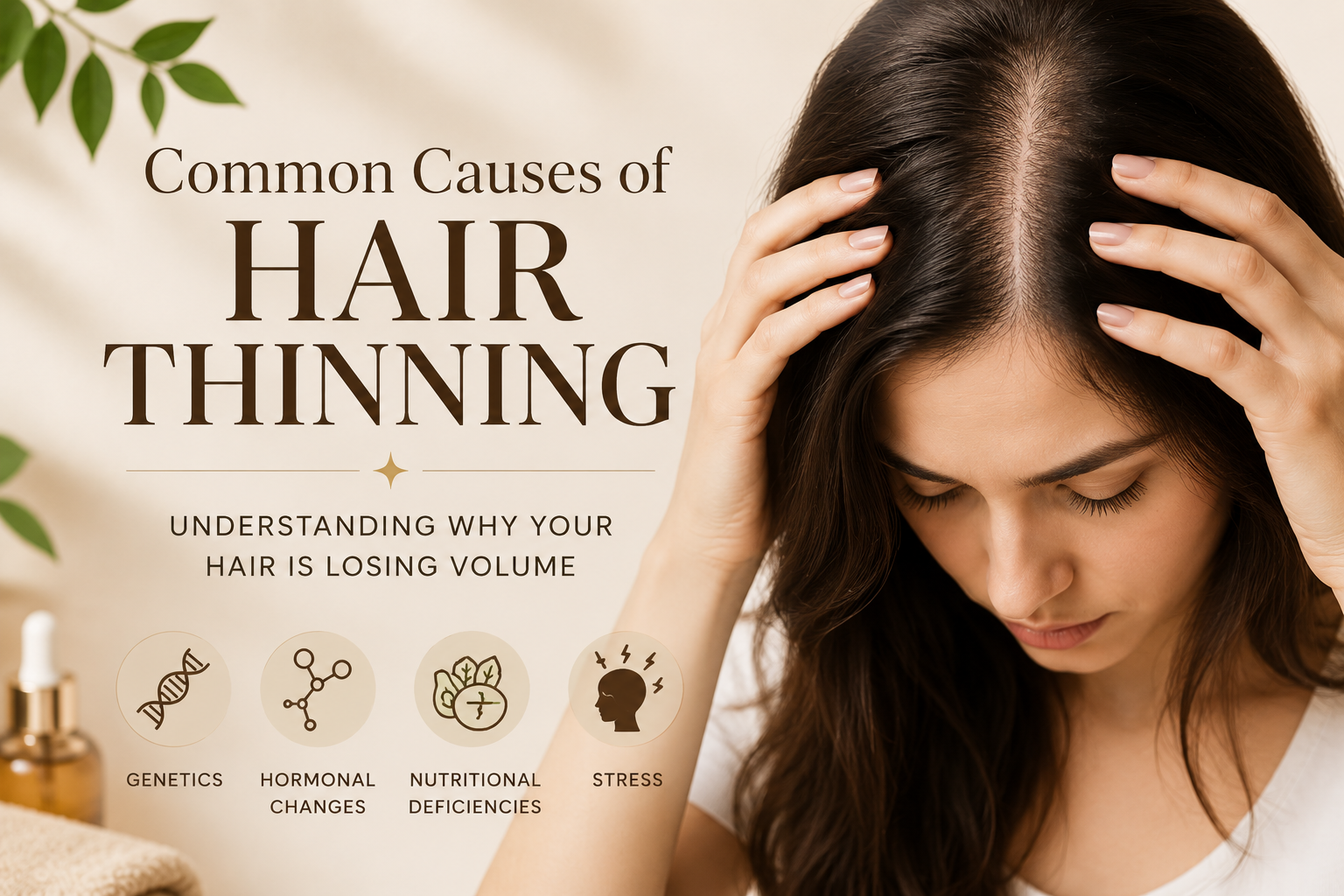
Common Causes of Hair Thinning: Understanding Why Your Hair Is Losing Volume
Hair thinning is one of the most common hair concerns experienced by both women and men. While it’s normal to lose 50–100 hairs a day, noticeable thinning, reduced volume, or widening part lines may indicate an underlying cause that deserves attention.
The good news? Hair thinning is often manageable when you identify the root cause early and adopt the right haircare routine.
In this guide, we’ll explore the most common reasons behind hair thinning and what you can do to support healthier, fuller-looking hair.
What Is Hair Thinning?
Hair thinning refers to a gradual decrease in hair density. Unlike sudden hair loss, thinning develops over time, making your hair appear less voluminous and your scalp more visible.
It can affect people of all ages and may occur due to lifestyle, hormonal, environmental, or genetic factors.
1. Genetics
One of the leading causes of hair thinning is hereditary hair loss. If your parents or close relatives experienced thinning hair, you may also be genetically predisposed.
Signs include:
- Gradually widening part
- Reduced hair density
- Slow progression over several years
2. Hormonal Changes
Hormones play a significant role in hair growth.
Hair thinning may occur during:
- Pregnancy
- After childbirth
- Menopause
- Polycystic Ovary Syndrome (PCOS)
- Thyroid imbalances
When hormone levels fluctuate, the hair growth cycle can be disrupted, leading to increased shedding.
3. Nutritional Deficiencies
Healthy hair requires proper nutrition.
Low levels of nutrients such as:
- Iron
- Vitamin D
- Vitamin B12
- Zinc
- Protein
can weaken hair strands and slow healthy growth.
A balanced diet is essential for maintaining strong, resilient hair.
4. Stress
Physical or emotional stress can trigger excessive hair shedding, a condition often called telogen effluvium.
Common stress triggers include:
- Illness
- Surgery
- Emotional trauma
- Lack of sleep
- Major life changes
The shedding usually begins a few months after the stressful event.
5. Heat Styling and Chemical Treatments
Frequent use of:
- Hair straighteners
- Curling irons
- Blow dryers
- Hair coloring
- Bleaching
- Chemical smoothening
can weaken the hair shaft, increasing breakage and making hair appear thinner.
6. Tight Hairstyles
Constant tension from hairstyles such as:
- Tight ponytails
- Braids
- Buns
- Hair extensions
may lead to traction alopecia, where repeated pulling damages the hair follicles.
Choosing looser hairstyles can help reduce unnecessary stress on your hair.
7. Scalp Health
Healthy hair starts with a healthy scalp.
Common scalp issues include:
- Excess oil
- Product buildup
- Dandruff
- Dry scalp
- Inflammation
Maintaining a clean, balanced scalp creates a healthier environment for hair growth.
8. Aging
As we age, hair naturally becomes finer and grows more slowly.
Hair follicles produce thinner strands over time, leading to reduced volume.
While aging cannot be prevented, proper haircare can help maintain healthier-looking hair.
9. Environmental Damage
Daily exposure to:
- UV rays
- Pollution
- Hard water
- Dust
can weaken hair over time, making it dry, brittle, and prone to breakage.
Protecting your hair from environmental stressors helps preserve its strength and shine.
10. Overwashing or Using Harsh Products
Using shampoos that strip the scalp of its natural oils may lead to dryness and increased breakage.
Choose gentle, nourishing formulas that cleanse without compromising the scalp’s moisture barrier.
Signs Your Hair May Be Thinning
You may notice:
- A wider hair part
- Reduced ponytail thickness
- More hair on your pillow or shower drain
- Visible scalp
- Less volume than before
- Increased breakage
How to Support Healthier Hair
Eat a Nutrient-Rich Diet
Include protein, healthy fats, leafy greens, nuts, seeds, and fruits to support healthy hair growth.
Be Gentle with Your Hair
- Avoid excessive brushing.
- Use a wide-tooth comb on wet hair.
- Minimize heat styling.
- Avoid overly tight hairstyles.
Care for Your Scalp
A healthy scalp is the foundation of healthy hair. Keep it clean and hydrated, and address concerns like dandruff or buildup promptly.
Choose Quality Haircare Products
Look for products that nourish the scalp and strengthen the hair without harsh sulfates or unnecessary drying ingredients.
Manage Stress
Regular exercise, quality sleep, and relaxation practices can support overall wellness, which may also benefit your hair.
When Should You See a Professional?
Consider consulting a dermatologist or healthcare provider if you notice:
- Sudden or severe hair loss
- Bald patches
- Hair thinning accompanied by itching, pain, or redness
- Hair shedding lasting several months
- Hair loss after starting a new medication
They can help identify any underlying medical causes and recommend appropriate treatment.
Final Thoughts
Hair thinning is a common concern, but understanding its cause is the first step toward healthier hair. Whether it’s stress, nutrition, hormones, genetics, or everyday hair habits, addressing the underlying factors and following a consistent, gentle haircare routine can make a meaningful difference over time.
At Purese, we believe healthy hair begins with thoughtful care. A balanced scalp, nourishing ingredients, and consistent self-care rituals can help you maintain hair that looks stronger, fuller, and more vibrant every day.